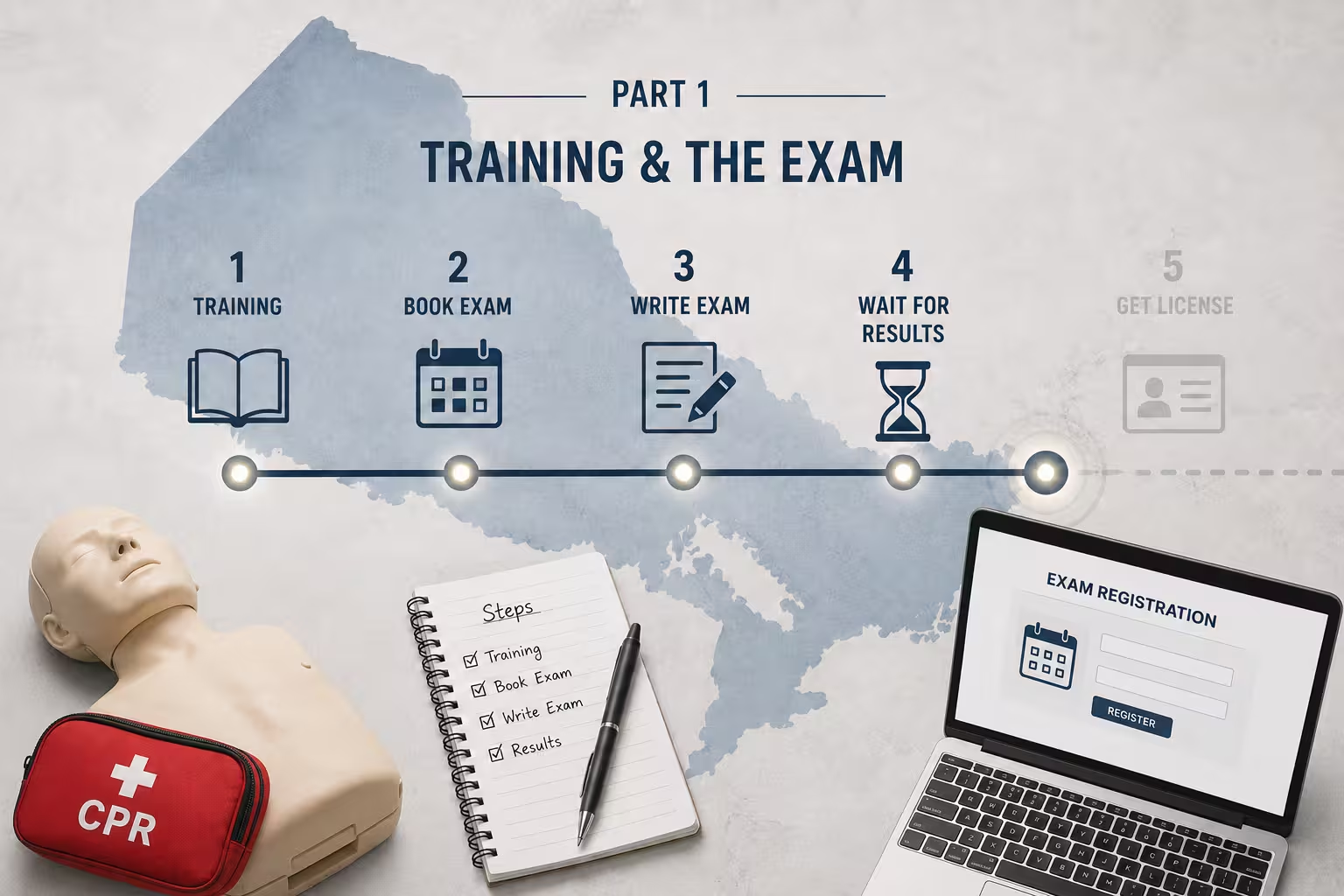


If you are thinking about becoming a security guard in Ontario, the first thing I want to tell you is that the process is not complicated. It can feel that way when you start searching online and end up going from one government link to another, trying to piece together what you actually need to do. I have been there. So let me just walk you through it like a friend who has done this, because that is exactly what I am.
There are two main parts to getting your licence. First, you complete the required training and pass a government exam. Second, you apply for the actual licence. They are separate steps, and you cannot do the second without finishing the first. This post covers the first part. We will get to the application in Part 2.
But before any of that, let's make sure you are eligible.
Before you spend time and money on training, make sure you qualify. The current full eligibility requirements are:
You have to be at least 18 years old. You have to be legally entitled to work in Canada, which means you can be a Canadian citizen, a permanent resident, or someone with a valid work permit. If you are not sure about your work authorization status, check before you proceed.
You need a clean criminal record. This does not mean you have to be perfect, but there is a list of offences that would disqualify you. If you were convicted of something in the past but received a pardon or a record suspension, you may still be eligible. We will talk more about the criminal record check in Part 2 because that is where it fits into the process, but it is good to be aware of it now.
And finally, you have to complete the mandatory training and pass the government exam. That is what the rest of this post is about.
If you check all of these, you are good to move forward.
This is where a lot of people make their first mistake, and it is an easy one to make. You search for security guard courses in Ontario, something comes up, it looks fine, you pay for it. And then later you find out it does not actually qualify you to take the government exam.
Here is what you need to know. Not every company that offers security guard training is approved by the Ministry of the Solicitor General. And if your training provider is not on the approved list, two things will go wrong. First, their course may not cover all the material required by the Ministry. Second, and more importantly, they will not be able to give you your Training Completion Number, or TCN. Without a TCN, you cannot register for the government exam. That is a problem.
So before you pay for anything, go to the Ministry of the Solicitor General website and check that your provider is on the approved list. The list is broken into categories including career colleges, community colleges, and security agencies, so you may have to look through a few sections. It takes five minutes and saves you a lot of headache.
One more thing worth knowing: as of March 2025, the number of approved providers in Ontario dropped from 331 to 181. That is nearly half, following a compliance audit that found most providers were not meeting Ministry standards. This is exactly why checking the list matters more now than it ever did before.
Once you have confirmed your provider is approved, look at how they teach. Some courses are in person. Many are now online. Some use video, some use slides, some give you PDFs. There is no single right answer here. What matters is that the format works for you and the way you learn. If they offer a preview or a sample, look at it before you commit.
The mandatory training for a security guard licence in Ontario is 40 hours total. It is split into two parts.
The first is the basic security guard training, which is a minimum of 33.5 hours. This covers Ontario law, the powers and responsibilities of a security guard, use of force, report writing, emergency response, and more. This is the core of what you need to know to do the job legally and safely.
The second is standard first aid and CPR, which is a minimum of 6.5 hours and must be completed in person. This is delivered by either a St. John Ambulance certified instructor or a Workplace Safety and Insurance Board approved first aid trainer, and the instruction must meet the St. John Ambulance emergency-level first aid standard. Not every first aid course out there meets this standard, so confirm this with your provider before you sign up.
I want to say something about the first aid portion because I think people underestimate it. As a security guard, you will be in situations where someone's life may depend on what you do in the first few minutes. Take it seriously. The in person requirement exists for a reason.
Some training providers offer both courses as a bundle. Others offer them separately. Either is fine, just make sure both are completed before you move on.
When you finish your basic security training, your approved provider will submit your completion to the system and issue you your TCN. Hold onto that number. You need it for the exam.
The exam is administered by an authorized testing provider on behalf of the Ministry of the Solicitor General. You can write it in person at a testing location, many of which are at the same locations as DriveTest centres across Ontario, or you can write it online.
When you go to register, you will need your TCN. That number confirms in the system that you have completed your training and are eligible to sit the exam. Without it, you cannot register.
The exam itself is 60 multiple choice questions and you have 75 minutes to complete it, though your appointment will be booked for two hours. The passing mark is 62 percent. Check the current registration fee when you go to book as costs can change.
If you are writing online, be aware that there are specific technical and location requirements you need to meet. You will need a device with a working camera. Before your exam starts, you will be required to do a 360 degree scan of the room on camera to show your environment. The room must be quiet, and no one else can be present. The session is monitored. Read through all the requirements carefully before you register for the online option so you are not caught off guard on exam day.
If you are not comfortable with any of that, write it in person. There is no advantage to writing online if it adds stress.
After you write, you will get your results by email or you can check them using your TCN on the testing provider's website. When you pass, you will receive an Ontario Testing Completion Number. Keep that as well. You will need it for your licence application.
When I went through this process, I used every gap between steps. After finishing my course I studied for the exam. After writing the exam I started working on my resume and looking at job postings. I did not sit and wait for one thing to finish before starting the next.
That time adds up. Use it well.
Work on your resume and cover letter. Think about what kind of security work you want to do and why. Look at job postings and understand what employers are actually asking for. Start your interview prep early, not the night before you apply.
There are also additional courses you can take while you wait that will make you a stronger candidate when you do start applying. Things like report writing, use of force awareness, and customer service training are not required for the licence, but they show employers that you are serious and that you have done more than the minimum. That matters, especially when you are new and competing with other applicants who also have a fresh licence.
And if you can, find someone who has actually worked in this industry and talk to them. A coaching or consulting session with someone who has been in the field can give you a clearer picture of what to expect on the job, how interviews typically go, what different sites and roles are actually like, and how to present yourself. That kind of insight is hard to get from a job posting. By the time your licence arrives, you want to be ready to apply, not just starting to think about it.
In Part 2, we cover the second half of the process. The criminal record check, the licence application, what documents you need, how long it takes, and what to do once your licence arrives.
Part 2 publishes next week.
Mary is the founder of Calrex Training Academy and has worked in the Ontario security industry for over 15 years, starting as a security guard and moving through roles in dispatching, supervision, and operations before specializing in emergency management and data analytics. She has hired and interviewed security guards and writes about security careers, licensing, and what it actually takes to succeed in this industry.