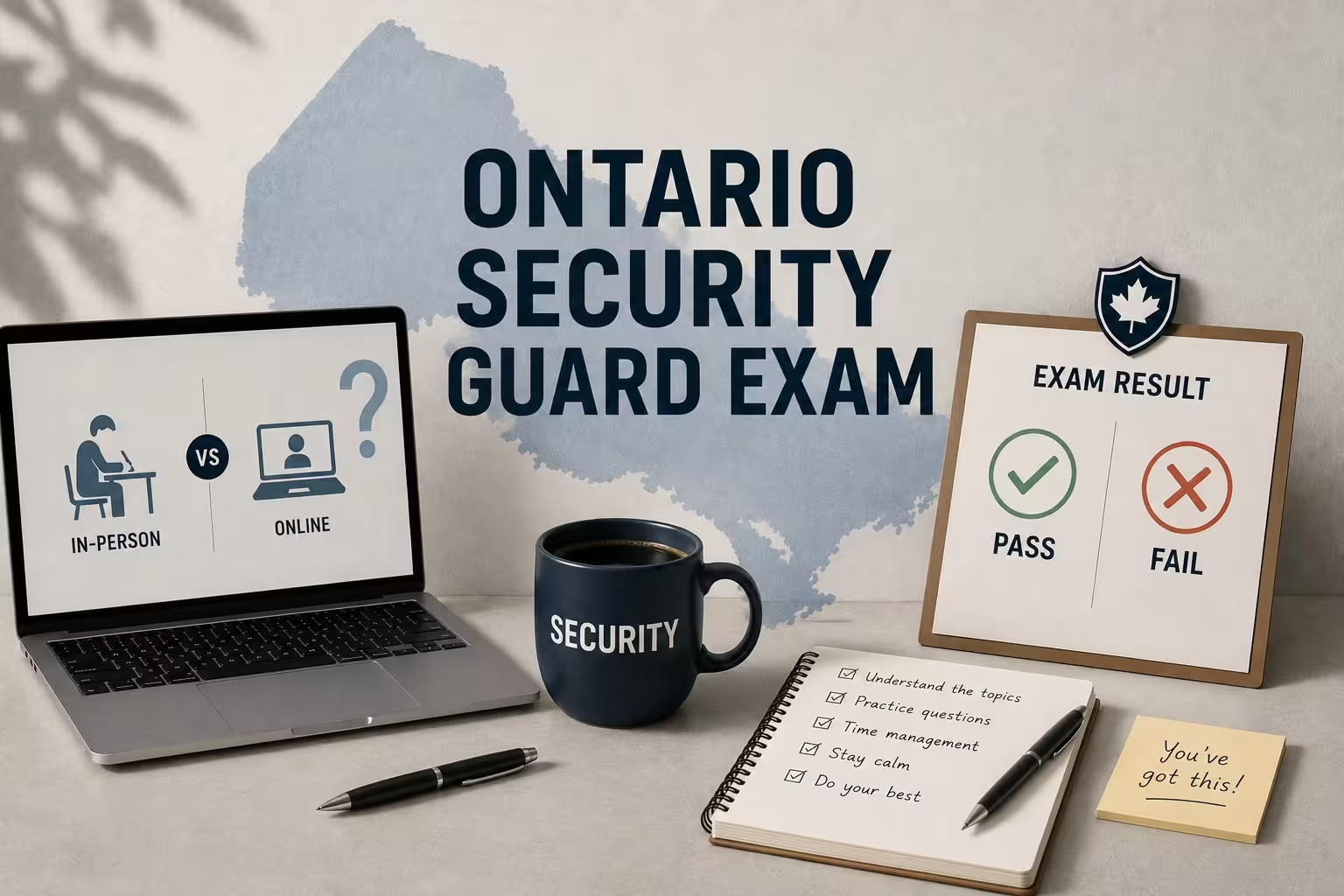


The exam is the part that makes a lot of people nervous. And I get it. You have spent weeks studying material that is new to you, and now there is a government test standing between you and your licence. That pressure is real.
But here is what I want to tell you before anything else: this exam is passable. A lot of people pass it. You can too, if you prepare properly and walk in knowing what to expect. So let me tell you exactly what you are walking into.
The Ontario security guard exam has 60 multiple choice questions. You have 75 minutes to complete it. Your appointment will be booked for two hours, but the actual exam time is 75 minutes, less than two minutes per question on average.
The passing mark is 62 percent, which means you need to answer at least 37 out of 60 questions correctly. That is your target number. Keep it in mind.
The exam is administered by the authorized testing provider on behalf of the Ministry of the Solicitor General. You can write it in person at a testing location or online from home. Both are valid options and both have their advantages. More on that in a moment.
This is entirely a personal decision and there is no wrong answer. Here is an honest breakdown of both.
Writing in person
When I wrote my exam it was in person only; online was not an option yet. I went to a DriveTest location in Toronto. It felt exactly like a school exam. You show up, they check your ID, you sit down, you write. There is something settling about that environment for a lot of people. No technical issues, no worrying about your camera or your internet connection. You just focus on the questions.
The downside is that availability depends on how busy the location is. You may have to book further in advance, and the location or time slot may not be as convenient for you.
Writing online
Online gives you more flexibility with timing and you can write from home, which some people find less stressful. If being in a testing centre with other people around adds anxiety for you, writing at home in a quiet space might actually help you perform better.
But online comes with its own requirements that you need to take seriously. You will need to download and install a specific browser called the SGT browser before your exam day; do not leave this to the last minute. You will need a working camera. Before the exam starts you will be required to do a 360 degree scan of your room on camera to show your environment. No one else can be in the room. No headphones. No phone visible. No second screen. You cannot switch to another browser or application during the exam.
The exam is fully proctored online, which means AI is monitoring you throughout. Movements like looking away from the screen too often or moving your mouse outside the exam window can flag your session. Read every technical and environmental requirement carefully before you commit to online, and make sure your setup meets all of them before exam day.
If there is any doubt about your setup or your internet connection, write it in person. Technical problems mid-exam are stressful in a way that is hard to recover from.
The exam covers the same material as your mandatory training. That includes Ontario law and the legal powers of a security guard, use of force, report writing, emergency response, access control, observation and surveillance, and more.
Some questions will feel almost immediate. You will read them and know the answer before you even look at the choices. Those are the questions that come directly from topics your course repeated over and over. Answer them fast and move on.
Other questions, particularly anything involving use of force, legal proceedings, court-related content, or scenario-based situations, may take more time. That is normal. Those questions require you to think, not just recall.
This is the part I really want you to pay attention to, because I have seen people fail exams not because they did not know the material but because they ran out of time or got stuck in their own head.
Here is what I want you to do.
When the exam starts, go through every single question from question one to question sixty. Answer every question you know with complete confidence, the ones where you do not even need to think. Just go. Do not slow down for any question you are unsure about. Flag it and keep moving.
The reason this matters is important. You might know the last fifteen questions cold, but if you spend too long stuck on question eight you may never get there. Every question is worth the same mark. A question you know in five seconds counts just as much as one that takes you three minutes.
When you reach the end you will have answered everything you know. Now you have a realistic picture of where you stand. You will feel more settled because you have already secured the marks you know. Now go back to the questions you flagged and work through them with whatever time you have left.
And this is something worth knowing: as far as I know there is no penalty for a wrong answer on this exam. That means you should never leave a question blank. Even if you have absolutely no idea, make your best guess. A guess gives you a chance. A blank gives you nothing.
Never leave a question unanswered. Ever.
When you walk out of that exam, whether you wrote it at a testing centre or closed your laptop at home, I want you to do one thing.
Go get an ice cream. Or a coffee. Or whatever makes you feel good. Seriously.
You just took a real step toward something. The exam is done. Whatever happens next is out of your hands, and worrying about it will not change the result. Exams put a lot of pressure on your nervous system and you deserve to decompress. Take a walk. Eat something you enjoy. Give yourself that moment.
And then, when you are ready, go back to your resume. Work on your interview prep. Keep moving forward. Because as I said in an earlier post: the time between steps is never time to just wait.
Mary is the founder of Calrex Training Academy and has worked in the Ontario security industry for over 15 years, starting as a security guard and moving through roles in dispatching, supervision, and operations before specializing in emergency management and data analytics. She has hired and interviewed security guards and writes about security careers, licensing, and what it actually takes to succeed in this industry.