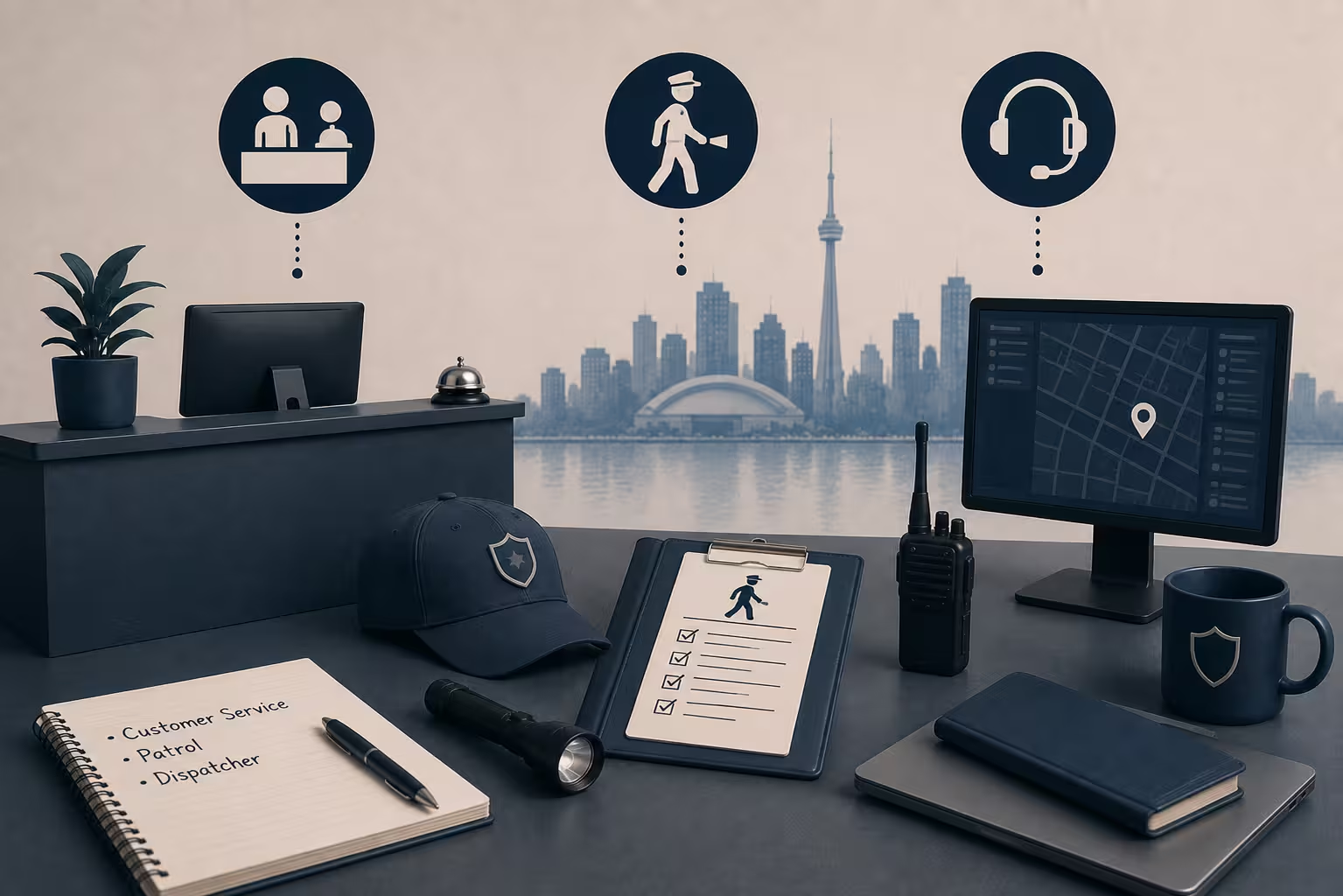


In Part 1, I covered the big picture of security work in Ontario, the difference between uniform and non-uniform roles, and why close protection and loss prevention are not ideal starting points for new guards. If you have not read that yet, start there.
This post covers the uniformed roles that most new guards will encounter first. These are the positions where you build your foundation, learn how things actually work on the ground, and start developing the experience that opens doors to everything else.
This is where a lot of people start, and for good reason. Customer service roles, sometimes called concierge positions, are the front desk of a building. You are the first person people see when they walk in.
The work typically includes greeting visitors, giving directions, checking people in, controlling access, monitoring fire alarms, responding to basic calls, receiving packages, and dealing with unwanted individuals on the property. It is a low-profile role. You are not usually going hands-on or making arrests. You are observing, reporting, and providing service.
Most of the time, you are sitting or standing at a desk. Depending on the site and the shift, especially night shifts or quiet weekends, there can be downtime. Some sites allow you to read or have your phone accessible during slow periods, as long as you are attentive.
The pay for these positions tends to be on the lower end of the scale because a lot of people can do the work and the risk level is low. That said, if you are working in a luxury condominium, a hotel, or a high-end corporate office, the pay can be better than average.
This is a solid starting point if you want to get into the industry, learn the basics of access control and customer interaction, and get comfortable in a security role without being thrown into high-pressure situations immediately.
Patrol guards are the ones who move. Your job is to walk through the building or property, do floor checks, check mechanical rooms, stairwells, parking areas, and any other space that needs regular monitoring. These are usually routine patrols on a set schedule determined by the site. You are not making up your own route. You are told what to check, what to look for, and how often.
But patrol guards are also typically the ones who respond to calls. Service calls, disturbances, unwanted people on property, medical emergencies, alarms. When something happens, the patrol guard is usually the first person sent. You escort emergency services to the location. You deal with situations that the desk guard calls in. You are on your feet for most of your shift, and you are the visible presence that acts as a deterrent.
This role pays more than customer service positions because the responsibility is higher and the work is more demanding. Some sites require patrol guards to wear a vest and carry handcuffs and a baton, which means you need additional use of force training. If the site requires those certifications, they will usually give you a timeframe to complete them. If you already have them when you apply, you have a better chance of getting hired for those positions.
Patrol is where a lot of guards really start learning. You see a wider range of situations, you develop your judgment, and you start building the experience that qualifies you for the next level.
A lot of people do not realize this, but working as a bouncer in Ontario requires a security guard licence. The PSISA specifically includes bouncers under the definition of security guard work.
Bouncer work is mostly found at bars, nightclubs, and entertainment venues. The job involves controlling entry, checking identification, managing crowd flow, and dealing with intoxicated or aggressive individuals. It can be high-energy and unpredictable, and situations can escalate quickly.
If you are considering this type of work, understand that the same legal rules apply to you as any other security guard. You do not have special authority because you are working a door. Use of force thresholds are the same. Your ability to justify your actions is the same. And if something goes wrong, you are held to the same legal standard.
This can be good work for people who are comfortable in fast-paced, high-energy environments and who have strong de-escalation skills. But it is not for everyone, and the hours are almost always late nights and weekends.
Dispatching is, in my personal experience, one of the best positions in security. And I say that as someone who did it and loved it.
As a dispatcher, you are the communications hub of the entire site. You monitor cameras, watch alarms, answer phones, use the radio to direct guards, coordinate responses to incidents, and keep track of everything that is happening across the property at any given time. You need to be able to multitask under pressure, make decisions quickly, and communicate clearly.
The reason I think dispatch is such a valuable position is that you learn every single role on the site. You have to know who does what, how every procedure works, and who is capable of handling which situations. No incident happens without the dispatcher being involved. You are talking to the guards, talking to the supervisors, talking to emergency services, talking to the public. You see everything from a position that no other role gives you.
It is the closest thing to a supervisory position without being one. And the knowledge you gain as a dispatcher translates directly into supervision, because by the time you move up, you already understand how every piece of the operation fits together.
Dispatcher roles almost always require some prior security experience. You need to know how to use a radio, how to communicate under stress, and how to handle multiple things at once. You also need solid computer skills, some admin ability, and the composure to stay calm when things are happening fast.
If you do not want to do the hands-on part of security but you want to learn everything about how it works, dispatching is the position for you. I was never someone who enjoyed arresting people or going hands-on. Dispatching let me see how every decision was made, how every arrest was handled, how every emergency played out, without being the one physically doing it. And that knowledge is what prepared me for everything that came after.
When I was a patrol guard, I used my breaks to go sit with the dispatchers and ask them how things worked. What does this system do? How do you handle this type of call? What should I learn? When a dispatch position opened up less than six months later, I already had a real understanding of the role. I applied and I got it.
In Part 3, I am going to cover the roles that usually come with more experience: supervisor, mobile guard, event security, hospital security, campus security, and construction and industrial sites. Each one is a different world, and each one teaches you something the others do not.
Mary is the founder of Calrex Training Academy and has worked in the Ontario security industry for over 15 years, starting as a security guard and moving through roles in dispatching, supervision, and operations before specializing in emergency management and data analytics. She has hired and interviewed security guards and writes about security careers, licensing, and what it actually takes to succeed in this industry.